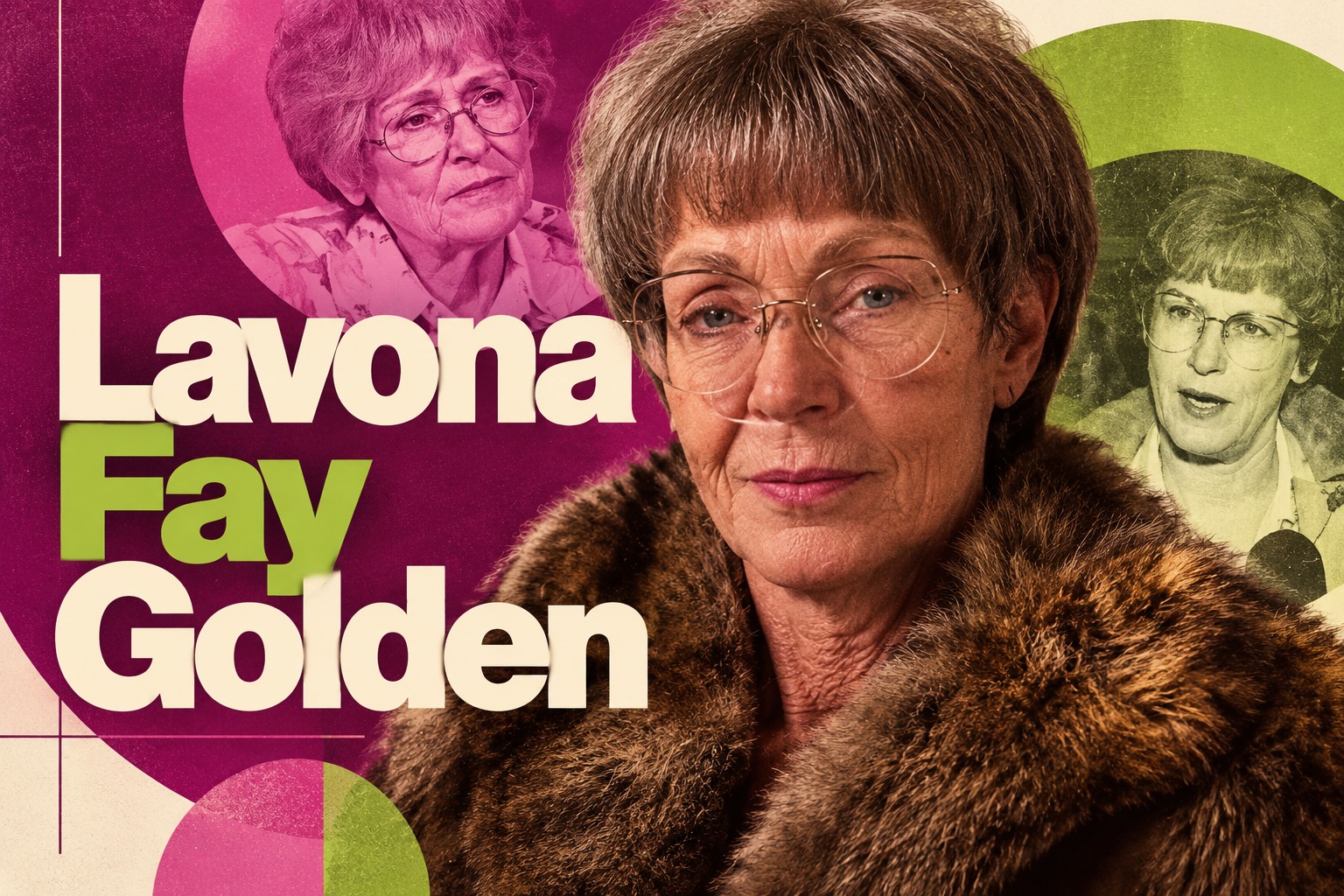
A Mother Within a Larger Public Narrative
I approach Lavona Fay Golden’s biography with attention to the difference between her life and the dramatic versions made from it. She is best known as Tonya Harding’s mother, and her public identity has been shaped by her daughter’s skating career, their estrangement, and disputed accounts of childhood abuse.
Golden was born on February 1, 1940, in Walters, Oklahoma. She is also identified as LaVona and has been called Sandy. Her adult life became associated with Portland, Oregon, where she worked as a waitress and helped support Tonya’s early skating.
The family story includes financial pressure, several marriages, and relationships that later broke down. The established chronology and the distinction between allegations and denials provide a clearer starting point.
Al Harding and Tonya’s Birth
Golden’s marriage to Al Harding produced Tonya Maxene Harding, born on November 12, 1970, in Portland. Al worked in a practical trade associated with heating and engineering. He lived from 1933 to 2009.
The parents’ relationship ended in divorce in 1987. Their daughter was then in her teenage years, already pursuing skating. The split therefore belongs within Tonya’s childhood and competitive development rather than after the major international attention of 1994.
I keep Al’s relationship precise: he was Tonya’s father and Golden’s former husband. Chris Davison, identified as Golden’s son from an earlier marriage, was Tonya’s half brother. Their different paternal relationships are part of the blended family history.
Accounts disagree about the total number of Golden’s children and the numbering of her marriages. Those details should not be resolved by inventing unnamed biographies. Tonya and Chris are the named children established in this account, while earlier unions form part of the broader background.
Waitressing and Skating Costs
Golden worked as a waitress while Tonya trained as a figure skater. Her contributions included paying for skating and making costumes. The combination connected paid work with practical tasks at home.
I find the costume making detail particularly concrete. Competitive skating requires equipment, lessons, travel, and suitable clothing. Sewing could address one expense directly, while wages supported other parts of the undertaking. That is a clearer picture than an unverified total for every month’s fees.
The family faced limited means, making Tonya’s development different from an imagined childhood of unlimited coaching resources. Golden’s work belongs in that history. It does not, however, determine the truth of later abuse allegations or excuse mistreatment if it occurred.
Support for an athletic career and harm within a relationship are separate questions. A parent can point to effort and spending, while a child can describe painful experiences. I do not treat one category as automatically disproving the other.
Tonya’s Competitive Rise
Tonya became a nationally prominent figure skater in the early 1990s and competed at the Olympics. Her accomplishments preceded and became entangled with the 1994 attack on Nancy Kerrigan and its aftermath.
Golden’s public visibility increased through the attention directed toward her daughter. She was not the athlete performing on the ice, and the daughter’s titles and competitive results should not be presented as Golden’s personal awards.
I see her role as part of the circumstances behind the athletic career. Work, transport, costumes, and parenting connected the family household with the rink. The actual skating remained Tonya’s performance, with its own training and competitive demands.
The later scandal also should not be used to invent Golden’s participation in the attack. Her public history includes comments about Tonya and the family, but proximity does not establish responsibility for another person’s actions.
Allegations Denials and Estrangement
Tonya has accused her mother of physical and emotional abuse during childhood. Golden has denied those allegations, including in interviews revisited when I, Tonya renewed public attention to the family.
The disputed accounts include a knife incident, which Golden rejected. I keep the allegation and denial attached to the people making them. Presenting the episode as an undisputed fact would remove a central feature of the public record: the two women gave conflicting descriptions.
Their relationship became estranged during the 1990s. Golden later expressed interest in reconciliation, including a public appeal in 2008. That does not establish that a reunion occurred.
I think of the disagreement as a fracture that runs through the family narrative. It cannot be repaired on the page with a tidy imagined reconciliation, nor can it be fully explained by selecting the most dramatic screen scene. The estrangement itself is the established relationship circumstance.
James Golden and Later Public Attention
Golden married James R. Golden on December 1, 1987. The marriage came in the same year as the end of her relationship with Al Harding, placing it before the Olympic scandal and decades before the film about Tonya.
James has a limited public profile. His name and the marriage date identify the later household connection without supporting a detailed account of his occupation, finances, or personal views.
In 2018, Golden again became visible through interviews responding to I, Tonya. Allison Janney portrayed her in the film. Janney’s acting recognition belongs to the performer; it is not an award won by the real Golden.
Later references have often concerned the movie and archival interviews rather than new events in Golden’s life. The absence of new headlines does not establish her health or current circumstances. The dated public appearances are enough to describe this phase of her visibility.
FAQ
How is Lavona Fay Golden related to Tonya Harding?
She is Tonya’s mother. Tonya was born in November 1970 to Golden and Al Harding. Golden’s work and practical support were part of Tonya’s early skating environment.
Did Golden agree with the abuse account in I Tonya?
No. She publicly denied abuse allegations and disputed specific incidents associated with Tonya’s account. The film dramatized a disputed family history and should not replace the distinction between allegation and denial.
Who portrayed Golden in the film?
Allison Janney portrayed her in I, Tonya. Janney’s performance and awards are part of the film’s history, while Golden is the real person whose life and family relationship informed the portrayal.