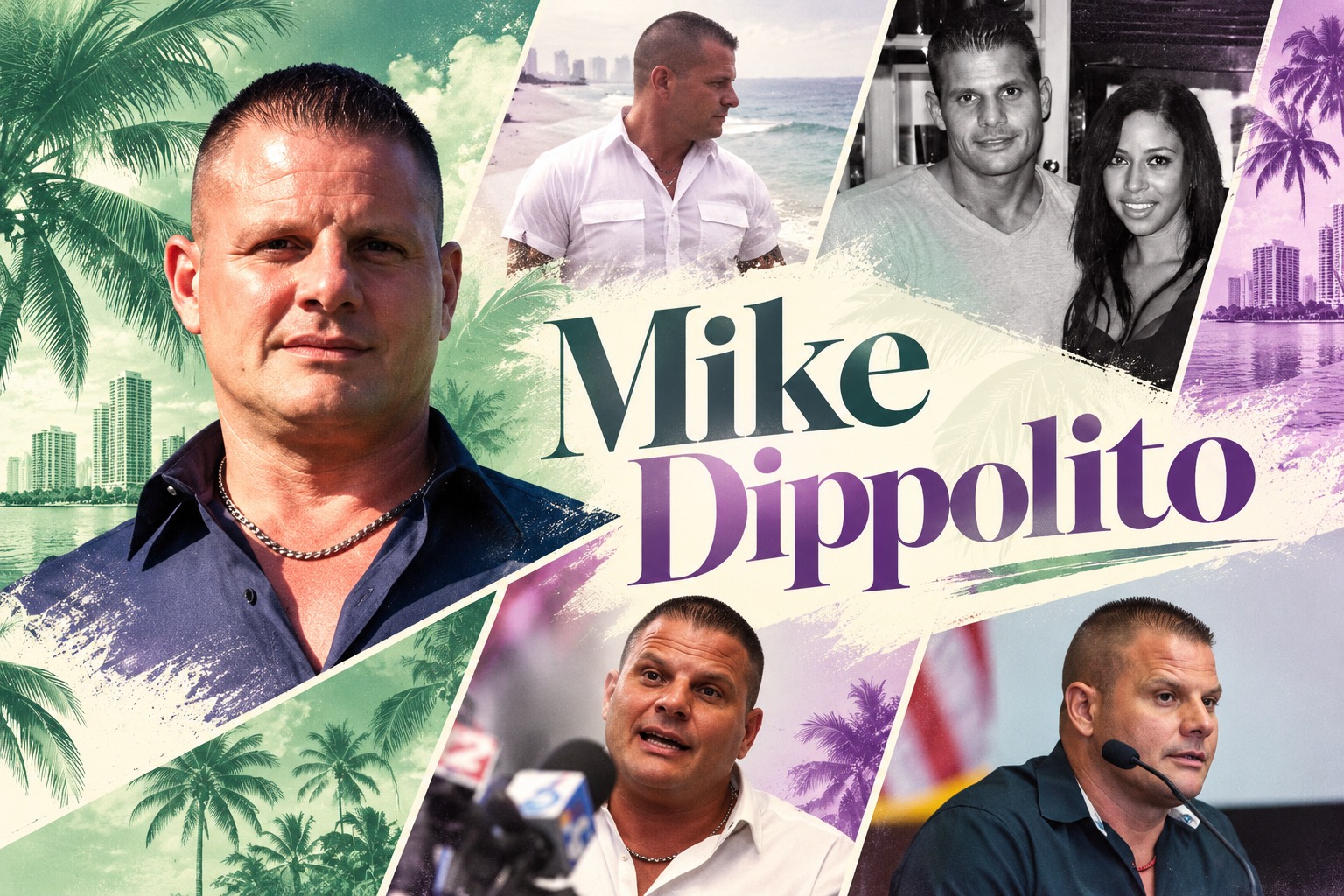
Mike Dippolito, also known as Michael Dippolito, became widely recognized as the intended victim in a Florida murder for hire plot involving his then wife, Dalia Dippolito. The case began in 2009 and passed through several trials before a 2017 conviction. I see his biography as a story with a legal crisis at its center, but with relationships and work on either side of it.
He lived in the Boynton Beach and Palm Beach County area when the events unfolded. His background included earlier criminal convictions, followed by business and property work. Later accounts described a new relationship with a woman named Gloria. These pieces form a more complete sequence than the single police video that brought the case to a large audience.
Life Before the 2009 Investigation
Mike had legal troubles before his marriage to Dalia. His background includes a 2002 fraud and grand theft conviction, time in custody, and probation around the period of the later case. I include that history because it is part of the established chronology, while keeping it distinct from the plot in which he was the intended victim.
His work has included internet entrepreneurship and real estate or property activity. Those descriptions place him in business, even though television coverage eventually made his name familiar. I see that earlier occupational setting as a useful part of the life that preceded the investigation.
Mike was married before he met Dalia. He divorced his earlier wife and married Dalia soon afterward, in February 2009. This sequence places the later marriage immediately after another household chapter, with the criminal investigation following within months.
A Short Marriage and an Undercover Sting
Mike and Dalia’s marriage was only months old when Boynton Beach police investigated the attempted arrangement to have him killed. In the summer of 2009, Dalia spoke with a man she believed could carry out the killing. He was an undercover officer. Recorded conversations became central evidence in the case.
Police then staged a crime scene and told Dalia that Mike had been killed. Mike was alive and had been kept away from the staged scene. The difference between the apparent event and the actual event is essential. No murder occurred. The investigation concerned an arrangement to bring about a killing, with Mike as its intended target.
I find that distinction especially important when describing the widely circulated footage. The images were part of an operation, not a recording of Mike’s death or its aftermath. Their dramatic appearance helped carry the story far beyond Florida, but the legal case rested on the alleged solicitation and the evidence gathered around it.
The People Connected to the Case
Dalia was Mike’s wife at the time and later his ex wife. She became the defendant in the solicitation case. Mike occupied a different position: intended victim and witness. Their former marriage explains their family connection, while the criminal proceedings explain why both names became prominent.
Mohamed Shihadeh was another figure in the investigation. He had contact with Dalia and cooperated with police. His involvement helped move the matter into law enforcement channels. He should be identified through that role, rather than placed among Mike’s relatives merely because his name appears repeatedly in the same story.
The same care applies to Judge Glenn Kelley and defense attorney Brian Claypool. Kelley appeared in the later sentencing proceedings, while Claypool represented Dalia. They were public legal participants.
Three Trials Across Several Years
The first conviction came in 2011. It was later overturned on appeal, which meant that the case returned for further proceedings. A second trial in 2016 ended with a hung jury. A third trial in 2017 resulted in a conviction for solicitation to commit first degree murder.
Those three stages explain why the story remained in public view for so long. The original operation happened in 2009, but the later conviction came eight years afterward. I read the sequence as a prolonged legal process rather than as a single trial followed immediately by a final sentence.
Dalia received a 16 year prison sentence after the 2017 conviction. Mike testified during the proceedings and spoke publicly about the case. His participation placed him before audiences repeatedly as the intended target, even when coverage focused primarily on Dalia’s defense, the recordings, or the decisions of juries and courts.
An overturned conviction and a hung jury also have different meanings. The former arose through appeal after a verdict; the latter meant jurors did not reach the necessary agreement at the retrial. Keeping these terms separate gives the timeline its actual shape and avoids implying that every proceeding ended in the same way.
Gloria and Life After the Trials
In 2017, Mike was described as engaged to a woman named Gloria. The relationship became part of his public story as the trials reached their later stage. I find that dated milestone useful because it gives the posttrial account a specific personal development.
His later work was also described in connection with real estate. Together, the professional activity and the new relationship offer two concrete details about life beyond the courtroom. They do not erase his earlier history or the crime case, but they show that his public story continued after the final trial.
The contrast in time is striking. Mike married Dalia in February 2009, became the intended target in a police operation later that year, and was still participating in proceedings years afterward. The 2017 relationship coverage therefore arrived at the end of a lengthy period of litigation, not immediately after the original incident.
A Story Revisited on Television
The case continued to appear in true crime programs and retrospectives, including later coverage in 2020 and 2023. The repeated return to the recordings explains why Mike’s name remains recognizable. A rebroadcast can feel new to an audience even when it recounts events that happened many years earlier.
For me, that creates a useful distinction between renewed attention and a new event in Mike’s life. Later discussion of the 2009 sting does not necessarily indicate a new charge, trial, or family development. The established chronology remains the marriage, investigation, successive trials, and later accounts of his relationship and work.
FAQ
Who is Mike Dippolito?
Mike, also called Michael, is the man targeted in the 2009 murder for hire plot involving his then wife Dalia Dippolito. He has also been described as an internet entrepreneur and a person involved in real estate work. He testified during the legal proceedings.
Was Mike killed in the police operation?
No. Police staged a crime scene while Mike remained alive. The operation gathered evidence around an arrangement to have him killed. The widely circulated footage showed the staged aftermath and Dalia’s reaction, rather than an actual homicide.
What happened after the original trial?
The 2011 conviction was overturned on appeal, a 2016 retrial ended with a hung jury, and a 2017 trial produced a conviction and a 16 year sentence for Dalia. Around that later period, Mike was described as engaged to Gloria and continuing with property related work.