Steve Valenzuela Before the Famous Records
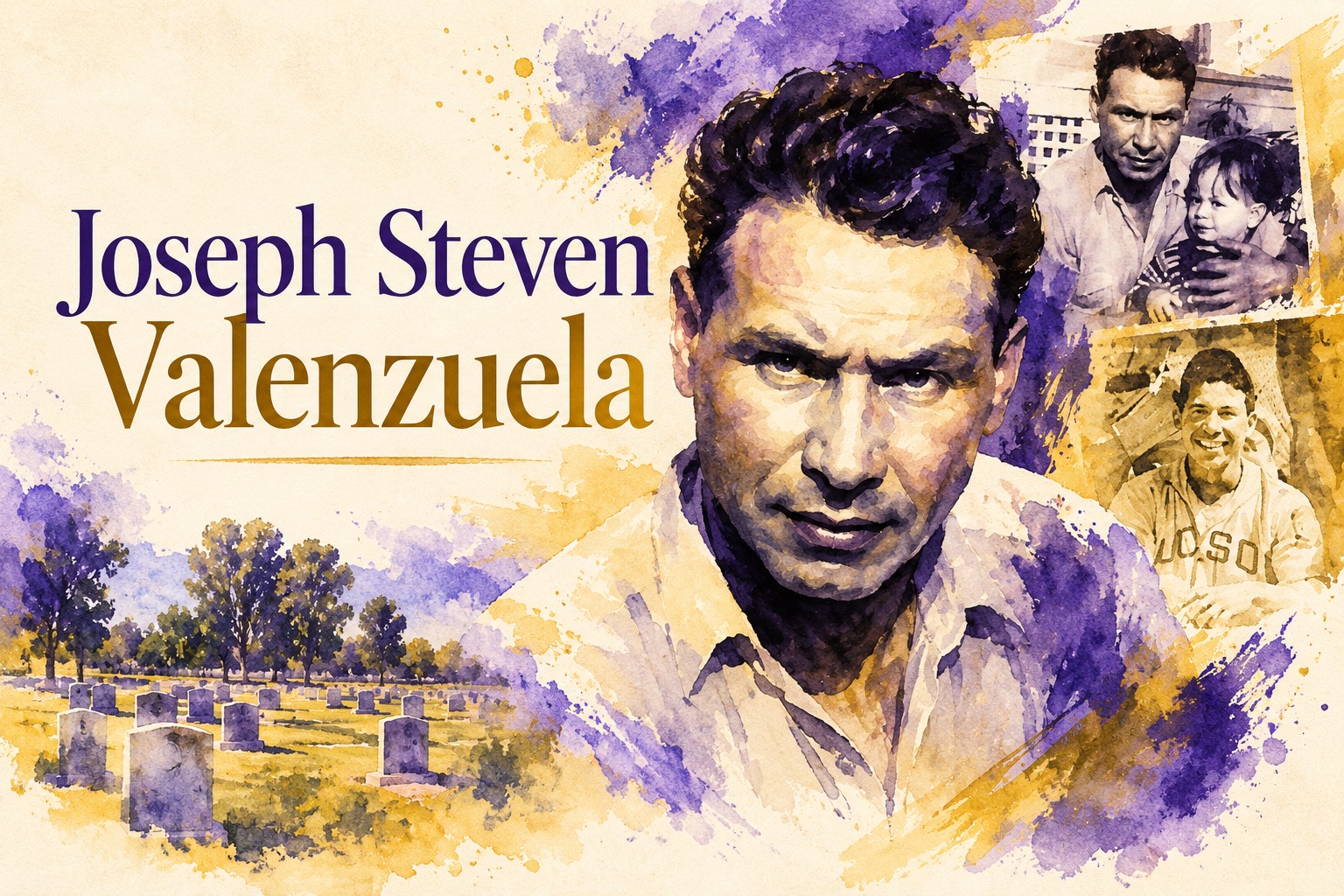
Joseph Steven Valenzuela is remembered primarily as the father of rock and roll musician Ritchie Valens. He was also known as Steve, and his middle name sometimes appears as Stephen. I find his own working life an important starting point, because his son’s brief recording career can otherwise consume the entire family history.
Joseph was born in the late nineteenth century, with family accounts differing between 1894 and 1896. He lived in the Los Angeles and San Fernando Valley area and died in January 1952. That date places his death several years before the records that made Ritchie famous.
He therefore belongs to the musician’s childhood story rather than the later touring and recording years. His work, relationship with Concepción Reyes, and encouragement of his son’s early musical interests describe the role he played while he was alive.
A Working Life in Southern California
Joseph’s occupations included tree surgeon, horse trainer, and munitions factory worker. These were different kinds of labor, each tied to practical skills and the need to support a household. Factory work also connects his biography to the wartime economy of the 1940s.
The available account does not establish a single career with a complete sequence of promotions or employers. The variety is itself part of the account. Work with trees and horses involved one set of tasks; munitions production involved another.
The family is described as working-class. That background gives useful context to Ritchie’s beginnings in Pacoima without inviting speculative claims about hardship in every room or on every day. No established personal wealth figure exists for Joseph, and the later value of Ritchie’s musical legacy cannot be assigned backward to his father.
A parent’s labor can form the floor beneath a child’s early life without becoming publicly celebrated. Joseph’s occupations offer that ordinary foundation in a story later remembered for extraordinary musical success.
Concepción Reyes and the Household
Concepción Reyes, commonly called Concha, was Ritchie’s mother and Joseph’s partner. She is associated with Sonora in Mexico and Yaqui ancestry. Her name also appears as Concepción Valenzuela in accounts of the family.
Joseph and Concepción’s relationship belongs to the period before Ritchie’s birth and early childhood. Some accounts place their separation when Ritchie was still young.
Concepción raised a household that included children from more than one relationship. That structure makes careful family language important. A sibling of Ritchie is not automatically a sibling of Joseph, and a maternal half-brother of the musician should not be called Joseph’s biological son without clear support.
The household’s best-known child would later use a shortened stage name. The family name remained Valenzuela, while the recordings introduced Ritchie Valens to listeners.
Richard Steven Becomes Ritchie Valens
Richard Steven Valenzuela was born on May 13, 1941, in Pacoima, Los Angeles. Joseph and Concepción are identified as his parents. The younger Richard developed musical interests during childhood, and Joseph is remembered as encouraging them.
I find that encouragement the clearest personal connection between father and son in this account. It does not mean Joseph planned the later records, chose the stage name, or lived to see the professional breakthrough. It means music was part of their relationship before the son became famous.
Richard eventually became known as Ritchie Valens and recorded songs including La Bamba. His public success developed in 1957 and 1958, after Joseph’s death. The chronology keeps the father’s influence in its proper place: early encouragement rather than management of an established career.
Ritchie’s work also gave the Valenzuela household a new public identity. The family’s experiences became part of a musical biography that reached audiences far beyond Southern California.
Bob Morales and the Other Siblings
Robert Morales, known as Bob, was Ritchie’s older maternal half-brother. He was Concepción’s son from an earlier relationship. That makes him part of the household’s family history while distinguishing his parentage from Ritchie’s.
Connie, later known as Connie Valens Lemos or Connie Lemos, and Irma Norton are identified as Ritchie’s younger sisters. Mario Ramirez also appears in accounts of the wider sibling group, although descriptions of his exact half or step relationship differ.
That approach keeps the family visible without creating false biological ties.
Connie later became a prominent spokesperson for her brother’s legacy. Her interviews and participation in commemorations preserved family recollections that could otherwise be overshadowed by the short period of hit records.
Joseph’s Death and the Years He Did Not See
Joseph died in January 1952, commonly dated to January 8, and was buried at Holy Cross Cemetery in Culver City. Ritchie was ten at the time. The loss belonged to the childhood years, before the professional stage name and national performances.
On February 3, 1959, Ritchie died in the plane crash that also killed Buddy Holly and the Big Bopper. He was seventeen. Father and son therefore died seven years apart, with the younger man’s public success occurring between those losses.
I think those dates should be allowed to speak plainly. There is no need to invent what Joseph would have said about the records or the crash. His role was real, but his reactions to events after his death cannot be known.
A Family Story Revisited
The 1987 film La Bamba brought Ritchie’s life and family relationships to a wider audience. Later interviews, museum events, and commemorations continued to include Connie and other family members.
A film can make a family story vivid, but its scenes should not be treated as a complete documentary record of Joseph’s life. His established profile remains grounded in the occupations, relationships, early encouragement, and dates already associated with him.
The continuing family participation has kept attention on more than the final plane crash. Childhood, place, siblings, and the parents behind the young musician all belong to the broader memory of Ritchie Valens.
FAQ
Was Joseph Steven Valenzuela Ritchie Valens’s father?
Yes. Ritchie was born Richard Steven Valenzuela to Joseph and Concepción Reyes on May 13, 1941. Joseph encouraged his son’s early musical interests but died before the recording career that made Ritchie famous.
Was Bob Morales Joseph’s brother?
No. Bob Morales was Ritchie’s older maternal half-brother and Concepción’s son from an earlier relationship. Calling him Joseph’s brother would confuse two generations and misstate the family relationship.
What work did Joseph do?
His occupations included tree surgery, horse training, and munitions factory work. These roles place him within a working-class Southern California household. He is not documented as having a professional recording career of his own.