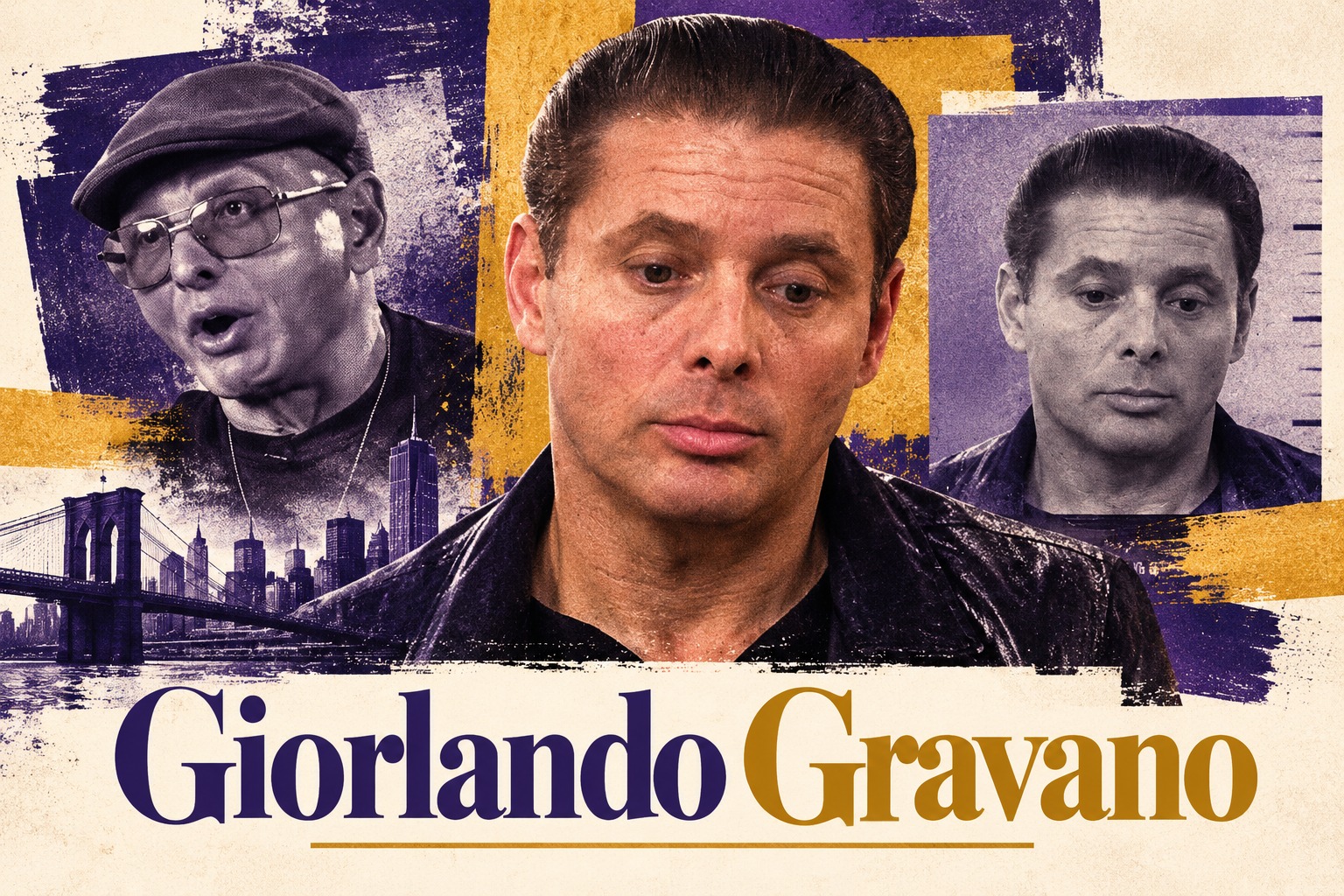
Giorlando Gravano’s life is often approached through the notoriety of his son, Salvatore Gravano. I find the father more clearly in the earlier sequence: Sicily, migration to North America, marriage, painting work, and a small dress factory in Brooklyn. His biography includes difficult family losses and relatives connected with organized crime, but those connections should not replace the account of his own labor and household.
Born on October 1, 1901, in Porto Empedocle in Sicily’s Agrigento province, he is also identified as Gerlando, Gerry, or Gerard. The name variations refer to the same man. His parents were Francesco Gravano and Vincenza Gucciardi. He died on January 27, 1980, in Staten Island, at age 78, and was buried at Calvary Cemetery in Queens.
From Sicily to New York
Giorlando’s early work included fishing in Sicily. In the early 1920s, he traveled to North America and entered the United States through Canada outside the legal immigration process. The family account describes assistance from his older brother Alphonsio, who had arrived earlier.
Alphonsio was involved in Prohibition era bootlegging and is described in the family history as having Mafia connections. His activities belong to his biography, even though he helped his brother migrate. Giorlando’s own working history followed another route, beginning with ordinary employment and later a business operated with his wife.
New York became the setting for Giorlando’s adult family life. He married Caterina Sgobbo on October 31, 1926, in Manhattan, and the couple raised their children in Bensonhurst, Brooklyn. I see the move from a Sicilian coastal town to a New York neighborhood as a major change in setting, while the continuity lies in work and family responsibility.
Caterina and the Dress Business
Caterina, generally called Kay, was born in 1906 and came from Apulia in southern Italy. She had immigrated legally as a child. Her background therefore differed from Giorlando’s route into the country. The marriage joined two Italian origins within one Brooklyn household rather than two identical migration stories.
Giorlando worked as a house painter in the United States, but lead poisoning led to a change of occupation. He and Caterina then operated a small dress factory in Bensonhurst. Her skill as a seamstress was important to the enterprise. I find that partnership central: the business was a shared form of work, with Caterina’s contribution visible in the account.
The factory employed local workers and was financed with help from a clothing manufacturer. It provided the family with a stable living, though no reliable personal net worth is established for Giorlando. A small business can be a substantial family achievement without being turned into a fortune. The dress factory is the clearest professional accomplishment attached to his name.
Five Children and Two Early Losses
Giorlando and Caterina had five children. Jennie was born in 1927 and died in 1928. Frank was born in 1933 and died in 1934. Both died in infancy. I retain the dates and the losses without assigning a cause of death, because suggested illnesses in the family account do not establish a diagnosis for either child.
Jeanne, born in 1936, survived into adulthood and became Jeanne Gravano Dolente. She died in 2015. Frances, born in 1940, became Frances Gravano Garafola after marrying Edward Garafola; she died in 2022. Their lives extended well beyond their father’s, adding later chapters to a family he had raised in Brooklyn.
Edward Garafola was connected with the Gambino crime family. That connection makes him part of the broader criminal history surrounding some relatives, but it does not establish that Frances or Giorlando participated in his activities. I keep marriage, kinship, and criminal conduct as distinct facts rather than letting one stand in for the others.
Salvatore and the Public Family Name
Salvatore Gravano was born on March 12, 1945, in Brooklyn. Known as Sammy the Bull, he became a Gambino underboss and later a government witness against John Gotti. His admissions involving 19 killings and his cooperation made the Gravano name widely recognizable. Much of that public notoriety developed after Giorlando’s death in 1980.
I think chronology is especially important here. Giorlando did not live through all the later testimony, prosecutions, and media appearances associated with his son. His own biography should not be written as if those later events had already defined every year of the father’s life. Sammy’s recollections of his father provide a family connection, while the two lives remain separate.
Giorlando’s brother Alphonsio and son Sammy create two different links to organized crime across generations. The available account nevertheless describes Giorlando as focused on legitimate work. The factory, marriage, and children form the more direct record of his adult life.
Descendants and Later Remembrance
Karen Gravano and Gerard Gravano are Giorlando’s grandchildren through Sammy. Karen became known through Mob Wives and a memoir. Gerard’s criminal history and later appearance in the 2025 documentary Sons of Ecstasy brought another generation into public attention. Those events concern descendants, not new events in Giorlando’s life.
Karina Seabrook, Karen’s daughter, is his great granddaughter. I place her one generation beyond Karen, rather than grouping all descendants together as grandchildren. Caterina survived Giorlando and died in 1984. Their shared burial and the remembrance of their infant children preserve a family story that is quieter than the later media history surrounding the Gravano name.
FAQ
Was Giorlando Gravano Sammy the Bull’s father?
Yes. Giorlando and Caterina Sgobbo Gravano were the parents of Salvatore, known as Sammy the Bull. Sammy was the youngest of their five children. I distinguish the father’s immigrant and business history from the son’s later organized crime career and government cooperation.
What work did Giorlando do?
His working life included fishing in Sicily, house painting in the United States, and operating a small dress factory with Caterina in Brooklyn. Lead poisoning prompted the move away from painting. Caterina’s sewing skills were part of the factory’s operation and the couple’s means of supporting their household.
Why is his name sometimes written as Gerlando?
Gerlando, Giorlando, Gerry, and Gerard appear as variants connected with the same man born in Sicily in 1901 and deceased in New York in 1980. The family relationships and dates make the identity clear. These variants should not be used to invent an additional father or grandfather in the Gravano family.